Sunday, February 12, 2017

Food Storage Basics Part One: What To Stock

There are a few basic rules to keep in mind when it comes to food storage. Today we will focus on this one:

1. Store what you actually eat

If you stock foods your family detests, they won't want to eat it, even in an emergency situation.  A case of canned creamed spinach might not be the best investment.  Try to have variety in your stored foods so you can make complete meals that your family will consider edible.

Meats, such as tuna, shredded beef and pork, chunked chicken, etc. are easy to find.  Oh, did you know that you can get Costco's wonderful food, even if you live far from a warehouse? Just search Kirkland Signature at Amazon!  I highly recommend their tuna. It tastes SO much better than run-of-the-mill brands.  Peanut butter, almond butter and other nuts provide both protein and fats, though the shelf life is variable.  Eggs are a wonderful protein, but are tricky to preserve.   (Time to get chickens!)


Meals in a can are especially helpful.  Think along the lines of beef stews, soups, chili with meat, etc. Nothing is easier than opening a can, warming it and eating.  Plan to keep some crackers of various kinds on hand to complement this type of meal.  Shelf life varies, but even stale crackers can be welcome when times are hard.

Canned fruit and veggies, and boxed side dishes like rice-a-roni and mac & cheese can round out a meal nutritionally and can bring a familiar and welcome comfort element.  Nutritionally they are not the best choice.  Homemade side dishes and fresh fruits and veggies are much better, but not always practical.  Try to have many options available in both types of storage.

Freeze dried foods have a long shelf life and can also be used to add variety.  I have tried Thrive dried fruit and they are tasty indeed.  If you are interested in learning more, click here and message the consultant I use.  She knows her freeze dried food!

Plan on including lots of shelf stable carbs to your storage.  Rice, beans and pasta are great bases for meals, are inexpensive and store well.  They are much cheaper than boxed side dishes, which should be used rather sparingly due to cost and less than ideal ingredients.   Oatmeal, cream of wheat, and grits make good breakfasts and even treats.

Don't forget about "morale" foods!  Being in an emergency situation, long term power outage, or sustained time of unemployment is a hardship.  A little bit of morale boosting tucked away on your shelves can do a world of good.  After Halloween, Christmas, Easter and other holidays, candy often goes on clearance.  That's a great time to stock up on some treats.  If you have a Foodsaver or other bag sealing device, put it to use! Chocolate, lollipops, hard candy, even marshmallows can be preserved.  Trailmix, nuts, dried fruits and veggies can all be stored with your Foodsaver.

Also, have a supply of salt, pepper, and the spices you often use when cooking.  I get my spices from Azure Standard.  They are so fresh and fragrant (and inexpensive, too!)  Sugar, yeast, flour, oils, ketchup, mustard and other staples also need their place in your pantry.

Of course we've already discussed water storage, but think, too, of storing drink powders. Flavored mixes can also include electrolytes which can be essential. Some folks also store dried milk, but we find it unpalatable.  I would do without it, even for long-term storage purposes.  Hot cocoa, apple cider and other drink mixes help bring variety in liquid form, too.


Don't forget your garden as a "pantry".  Gardening skills will make a very big difference in a bad situation.  Also, pair gardening skills with canning skills and equipment and you are golden!  You can preserve your harvest and may even have extra to share with others.


Much of my pantry is made up of items I canned myself.  We will discuss canning in other posts, but for now, watch garage sales and thrift stores for canning jars. Consider asking for them on Craig's List, Freecycle, local buy and sell pages and in your circle of friends.  Lots of folks have them and will never use them.  Collect all you can, as a canner's motto is "One can never have too many jars." Watch also for canning pots, lids, tools and even pressure canners.  These will be important to adding to your pantry the fruits of the earth.  So much food goes to waste in our nation.  Be someone who helps prevent that!

Next time, we will discuss ideas for storing your food supply.


Saturday, January 21, 2017

On The Matter of Food

Ah, food.  We love it. We crave it. We NEED it! If it were to run low, we would quickly panic.


Famines happen all over the world. They are caused by crop failure, foul weather, general political instability and oftentimes war.  According to the World Food Program, right now 1 in 9 people in this world are undernourished.  Famine isn't likely to happen in America any time soon, but food shortages are surprisingly common, even here.

Look at what happens every time a winter storm is predicted:


Bread. Milk. Eggs. Water. Always gone. Why?

People have been spoiled by generations of plenty.  Americans haven't had to provide food for themselves since the around the 1930's.  Supermarkets began springing up, providing an easy way to gather all your supplies in one trip. Gardens became much less needful. After World War II, when gardens and backyard chickens were encouraged, most shopping was done in supermarkets rather than neighborhood shops or your own backyard.  In not too many years, home delivery of staples was a thing of the past.  Having a garden or chickens became a sign of poverty, rather than a sign of prosperity.

Now people are dependent on their grocery stores.  When bad weather threatens, people panic and buy staples because they don't have them on hand already.  People who are "late" to the panic party are left with second quality food (opened packages, dented cans) or nothing at all.  When was the last time you saw someone with a full pantry of real food?


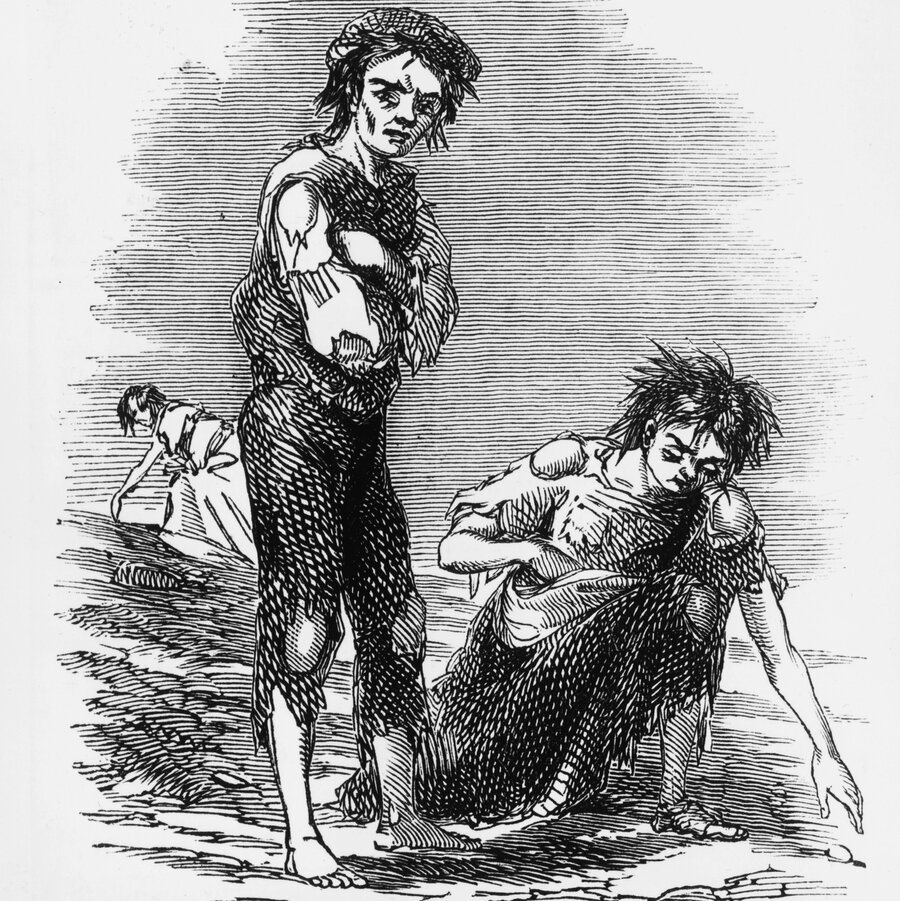
Could you feed your family for a week with ONLY the food in your house at this very moment? What about a month?  Venezuela has been struggling greatly for over three years.  There is no good news on the horizon for them. The famous Irish famine lasted seven years. Remember the Biblical account of Joseph and the famine in the Middle East? Can you imagine seven years of famine? 

Our next few discussions will center on food: what to stock, how to stock it and how to use it. 


Thursday, December 29, 2016

Water Storage Basics

We live in a very dry area.  We get an average of 11 inches of precipitation a year. For us, water storage is of utmost importance.  We have mild winters, but hot to extremely hot summers. For us, lack of water storage in an emergency situation could well be life threatening.  

Many folks around here have pools, which is the ultimate usable water storage method.  You can't just drink pool water, though. You have to have a method of making the water potable. Boiling, distilling, water treatment tablets and filtering are all effective, depending on what chemicals the pool has been treated with in the first place.  If I didn't know what chemicals were used, I would distill.  Our pool is a salt water pool and we add very few other chemicals, so I would be comfortable just boiling and/or filtering the water depending on the use. 

I recommend keeping some test strips on hand to check your water sources. Knowing what's in your water can help you know how to treat it the most effectively.


We have had a Berkey water filter for years. I highly recommend these.  They can make the worst water potable and safe.  We have the largest one and am I ever glad I bought big!  We still have to fill it at least once a day. This is something that I think every single family should have. 


We keep a Sawyer water filter  or a LifeStraw in each of our bags, for use on trails, when hiking or for filtering water from less than ideal situations. Lifestraw also makes a filtering cup that is good for filling up at gas stations/spouts/spigots where the quality of the water is unknown.  It makes me much more confident when drinking from sources I don't usually drink from. 

A SteriPen is another handy tool for quick cleaning water.  We have one and have used it on spring water when we were hiking.  Didn't get sick, so that's good! 

Keeping clean water on hand for immediate use is a wise step.  There are lots of ways to do this.  Buying cases of bottled water is the easiest way to start. They stack well and are cheap at big stores like Costco. You can get gallon sized water bottles at most grocery stores, too. They are harder to store.


Some people like to use water bricks.  They are an investment, and must be stored properly, but can help you store a good amount of water in a small space.  I don't have any of these. 


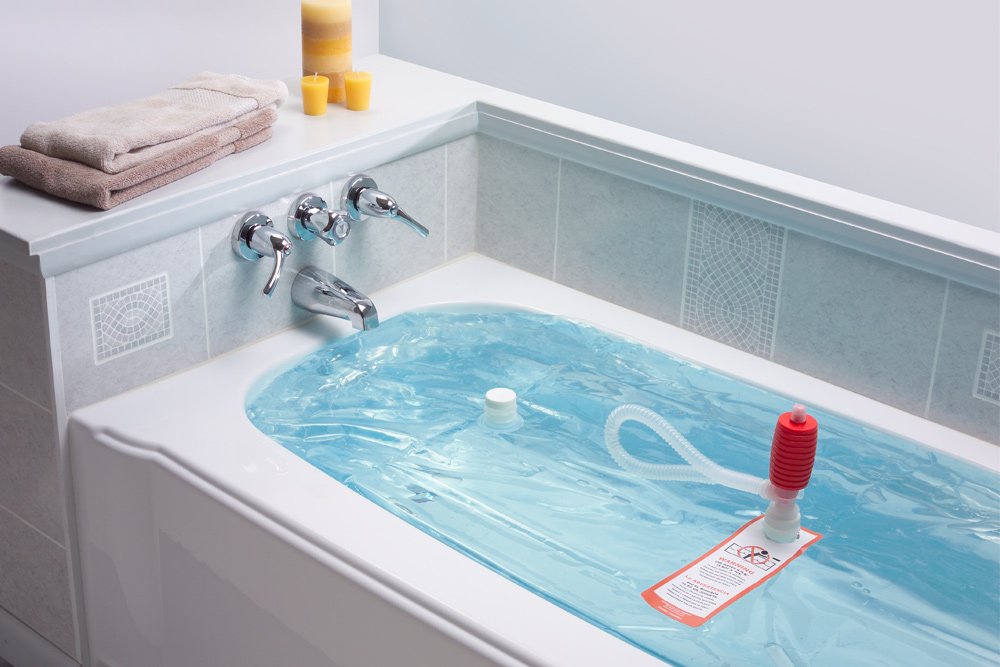
A WaterBob or AquaPod is a must for quick emergency water storage.  When an event happens nearby, you can quickly fill the bag before water pressure drops and the pumps stop working.  You then have lots of water, conveniently stored and easy to use.  I would choose AquaPod over WaterBob because it is made in the USA and the quality seems better, but either would be a welcome item in an emergency.  

Monday, December 5, 2016

The Question of Survival

The old saying goes like this: 

Three minutes without oxygen,
Three hours without shelter,
Three days without water,
Three weeks without food, 
Three months without hope.

This is an axiom, not hard and fast statistics, of course.  I walk around for hours outside without shelter and don't die! 

The saying reflects general types of emergencies:

1. Drowning, strangulation, some medical conditions
2. Hyperthermia, hypothermia
3. Dehydration
4. Starvation
5. Depression, despondency


The purpose of preparedness is to head off these sorts of situations altogether, if possible, and to give us the tools, skills, and wisdom we need to deal with these situations if and when they do occur. 

We live in a fallen world.  We are surrounded by sinners; some saved by grace and many more, not. Bad things happen in everyone's lives, eventually.  Sometimes, no matter how prepared you are, when the proverbial "Stuff Hits The Fan", there's little you can actually do. Sometimes, your skills, tools and/or wisdom will save lives. 

At this point, we're beginning to collect the skills, tools and experience that will help us survive an emergency or, like Joseph, weather hard times to come.


"Trust in the Lord with all of your heart and lean not on your own understanding;  
In all your ways acknowledge Him and He shall direct your paths." Proverbs 3:5-6


Tuesday, November 29, 2016

"I'm SO Overwhelmed!!"

That's the thought of most people when they consider this "prepping" adventure.  They start reading blogs, seeing people's massive pantries, reading about people living off grid, and then simply get bogged down by how far behind they are and how much there is to do!  It seems impossible! Some people give up at that point.  Don't be that person.  


So how can we break this seemingly overwhelming task into steps that are realistic?  Take it easy...breathe...pray.  Remember: We're not going to be so stuck on fearing the future that we forget to enjoy today!

Spiritual preparation is *the* most important.  You will never have real peace until you surrender your life to Jesus Christ (Galatians 2:20-21).  Once He is in His rightful place, everything else falls into place.  The promises of the Bible are then for YOU, not just for others.  

So get right with the Lord. 

Now let's think about physical things that would be important in an emergency:

1. Water
2. Food
3. Shelter
4. Protection
5. First Aid/Medicine
6. Various Unusual Skills

Of course the order of importance depends on the emergency. These are the main topics we will be delving into on this blog.  

Slowly, but steadily. 

We'll talk how to begin water storage soon.  Until then, what topics would you add to my list of six? 

Monday, November 28, 2016

My Preparation Inspiration

People have asked me what began our preparation-mindedness.  Here is the basic story: 

My husband and I became active in Search and Rescue (SAR) while we were in high school. We were so blessed to be able to learn valuable skills early in life, including tracking, map and compass skills, white water rescue, navigation by stars, wilderness survival skills of all kinds, trapping and snaring, field first aid, and more. 

On one of our tracking expeditions, we began at the instructors house.  It was way out, deep in the Oregon woods.  The man who was going to be teaching us was still prepping our outing, so his wife was showing me around her kitchen.  I was the only girl on the team and she thought it was GREAT that I was learning all this!  She brought me into her pantry and I was stunned.  It wasn't fancy at all.  It was rather dark, with only one incandescent bulb lighting the whole thing.  It was HUGE and it was STUFFED. 


Home canned food, purchased food, buckets of dry goods, baskets of potatoes, and on and on and on.  I asked her why in the world would she have so much food when it was just her and her husband.  She laughed and told me that sometimes they would be snowbound for weeks in the winter. She wasn't going to be caught without a meal to serve! 

That introduced me to the idea of "prepping".  It's just old fashioned wisdom, not a new fangled mania.  

The next part was the Y2K panic.  I was a young momma.  I had a 4 year old, a 3 year old, an almost 2 year old and a two teen boys and a teen girl who we were fostering. I was not caught up in the panic.  I didn't think anything would happen that would affect me.  A few days before it was supposed to happen, we got a little cash out of the bank to have at home in case the banks were down for a few days.  But I did have one thought that bothered me all night...

I had a very quick daydream of my oldest two looking at me sadly.  The baby was crying in the background but was out of sight.  I told the girls, "I'm sorry. You'll just have to try to sleep anyway. I haven't any food to give you."


That image turned me into a "prepper".  I began to buy a little extra food, so that if I missed a trip to the store, I would still be able to put together a few meals.  At the time, I shopped often and didn't cook from scratch very much. We had little extra money (and we didn't eat all that healthy at the time), so the food I put up extra was things like noodle and cheesy packets, rice-a-roni, instant oatmeal, crackers, some canned soups, dry milk, a few gallons of drinking water and lots of cereal. It wasn't much, but it was a start.

Y2K came and went without a bang, but I was never the same. I was beginning to learn to be old fashioned. 

Saturday, November 26, 2016

Welcome!

I'm glad to see you here. I have so enjoyed sharing our family's adventures, school times, favorite recipes (mega-sized, of course) and other things with you. I thought that it may be time to share a bit about our thoughts on preparing for the future. No one knows what tomorrow will bring.

Proverbs 27:1 "Do not boast about tomorrow, for you do not know what a day may bring forth."

James 4:13-14 "Come now, you who say, “Today or tomorrow we will go to such and such a city, spend a year there, buy and sell, and make a profit”; whereas you do not know what will happen tomorrow."

President-elect Trump should be coming into office in January.  Right now, the markets are up, precious metals are down, doom and gloomers on the right are more optimistic, doom and gloomers on the left are riled up, and society is uneasy in general. There are riots and uprisings in some cities, while smaller cities and towns are mostly peaceful.  We haven't had a huge natural disaster in a while. We haven't had a large terrorist attack in a while. 


This is the time to think about what you would do in the case of an emergency.  That emergency could come in one of many faces: economic collapse leading to societal collapse, nuclear attack, terrorist attack, EMP, pandemic....somewhat more likely but still somewhat rare: earthquake, hurricane, forest fire, flood, windstorm, ice storm...or even more likely for the average person: car accident, illness or injury, job change or unemployment, divorce, major home repair. 

Something along one of these lines is guaranteed to affect almost all of us some time in the next year.  

Be honest with me. 
Would you be able to comfortably live in a week-long power outage? 
What if you couldn't get to the store for a week? 
What if your husband lost his job next week? 
Would you have enough food and water for your family to outlast these emergencies? 
What if the emergency lasted a month?  Longer?  
Remember, we're being honest. 

Consider these things and let's meet back here to talk about very basic preparedness.  

Let's face it.  We're not "Doomsday Preppers". We are moms and dads.  We are sisters and brothers. We aren't looking to survive a direct nuclear hit. We just want to be able to weather the storms that come into everyone's life with more comfort than if we hadn't thought ahead.  

We're not going to be so stuck on fearing the future that we forget to enjoy today! 

Phil. 4:6-7  "Be anxious for nothing, but in everything by prayer and supplication, with thanksgiving, let your requests be made known to God; and the peace of God, which surpasses all understanding, will guard your hearts and minds through Christ Jesus."